How to Remove Stubborn Stains from Your Sofa: A Singapore Homeowner's Guide
Coffee, ink, curry, wine — Singapore homes are tough on sofas. Here's what to do in the first 5 minutes, which DIY methods actually work, and when to call a professional.

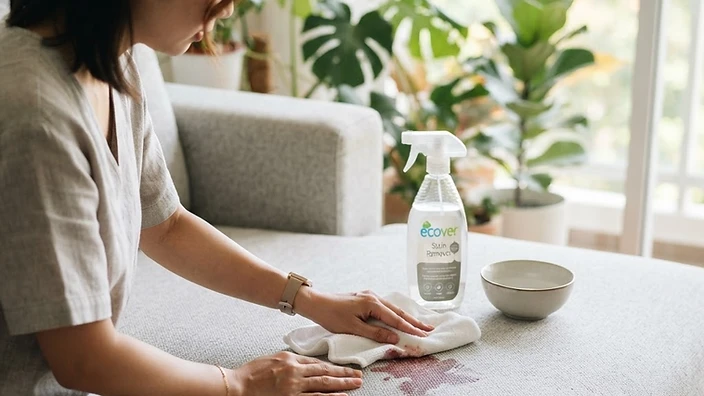
Spills happen. In a Singapore home — open kitchens, kopi sessions, kids with markers, monsoon dampness — your sofa takes a beating. The good news: most stains are removable if you act fast and use the right method. The bad news: the wrong method can set the stain permanently.
This guide covers the five most common sofa stains in Singapore homes, what to do in the first five minutes, and when to stop and call a professional.
The Golden Rule: Blot, Don't Rub
Before we get to specific stains, memorise this: blot, never rub. Rubbing pushes the stain deeper into the fabric fibres and spreads it over a larger area. It also damages the fibre structure, making the fabric look worn even after the stain is gone.
Use a clean white cloth or paper towel. Press down firmly, lift, move to a clean section of the cloth, press again. Keep going until the cloth comes up dry.
1. Coffee and Tea Spills
Coffee is one of the most common sofa stains in Singapore — kopi on the couch is practically a national pastime.
First 5 minutes: Blot up as much liquid as possible with a clean cloth. Don't rub.
Next: Mix one teaspoon of mild dish soap with one cup of cool water. Dab the solution onto the stain with a cloth — don't soak the foam underneath. Blot with a dry cloth. Repeat 3–4 times.
For dried coffee: The tannins in coffee set over time. A professional extraction clean is usually needed to fully remove a dried coffee stain, especially on light-coloured fabric.
2. Ink Stains
Ink from pens, markers and printer cartridges is one of the hardest stains to remove — and one of the most common in homes with children.
First 5 minutes: Place a clean cloth under the stained area (to stop the ink spreading to the foam). Dab the stain with isopropyl alcohol (rubbing alcohol) on a cloth — alcohol breaks down ink. Blot, don't rub. Move to a clean section of cloth each time.
Warning: Don't use water on ink — water can spread it. Don't use heat — heat sets ink permanently.
For large or old ink stains: Alcohol may not be enough. A professional solvent treatment can dissolve ink that has penetrated the fabric, but on some fabrics the stain may be permanent. Call a professional before attempting anything stronger.
3. Curry and Food Grease
Singapore's open-plan kitchens mean cooking grease travels — curry, fried food and spice oils settle on fabric and leave yellow stains that darken over time.
First 5 minutes: Lift off any solid food. Blot the grease with a clean cloth — don't rub, you'll push the oil deeper.
Next: Sprinkle cornflour or talcum powder on the stain and leave it for 15 minutes. The powder absorbs the oil. Brush it off gently, then apply a grease-cutting dish soap solution (one teaspoon in one cup of warm water). Blot, rinse with a cloth dampened in clean water, blot dry.
For set-in grease: Turmeric in curry leaves a yellow stain that's very hard to remove. A professional degreaser pre-treatment followed by hot-water extraction is usually needed.
4. Red Wine
Red wine isn't as common in Singapore as coffee, but when it happens, it's dramatic.
First 5 minutes: Blot immediately — don't rub. Get as much liquid out as possible.
Next: Cover the stain with salt. Salt draws the wine out of the fabric. Leave it for 30 minutes, then vacuum or brush off the salt. Dab with a cloth soaked in cool water, blot dry.
For dried wine: Wine tannins set fast. A professional treatment with an oxidising agent can lift dried red wine, but it needs to be done carefully to avoid bleaching the fabric's dye.
5. Pet Urine
If you have a pet, this is the one you fear most. Pet urine isn't just a stain — it's an odour that gets worse over time.
First 5 minutes: Blot up as much liquid as possible. Press firmly with a thick cloth — get as much out as you can.
Next: Don't use ammonia or bleach — ammonia smells like urine to pets and encourages repeat marking. Instead, apply an enzyme-based cleaner (available at pet stores). Enzymes break down the uric acid crystals that cause the stain and odour. Follow the product instructions — most need to sit for 10–15 minutes.
For old or repeated urine: The uric acid crystals penetrate deep into the foam and can't be reached by surface cleaning. A professional enzyme treatment, applied to both sides of the cushion, is usually needed. See our sofa deodorising service for details.
What NOT to Do
- Don't rub — blot only. Rubbing damages fibres and spreads the stain.
- Don't use hot water on protein stains (blood, urine, egg) — heat sets the protein permanently.
- Don't use bleach — bleach damages fabric dyes and fibres. It replaces a stain with a bleached patch.
- Don't saturate the foam — too much liquid seeps into the cushion foam, causing mould and water marks.
- Don't wait — the longer a stain sits, the harder it is to remove. Act in the first 5 minutes.
When to Call a Professional
DIY methods work for fresh, small stains. Call a professional when:
- The stain is more than 24 hours old
- The stain covers a large area
- DIY methods haven't worked after 2–3 attempts
- The stain is on a delicate fabric (silk, velvet, suede)
- The stain has penetrated to the foam (you can feel dampness underneath)
- There's an odour accompanying the stain
Professional sofa stain removal uses commercial-grade solvents, enzymes and extraction equipment that aren't available to homeowners. The cost is modest (from S$90 per sofa) and the results are dramatically better than DIY.
Preventing Stains in the First Place
The best stain is the one that never happens:
- Apply a fabric protector — a Scotchgard-type treatment makes spills bead on the surface instead of soaking in. We apply this after every professional clean.
- Eat at the table — the simplest rule, and the most effective.
- Keep a cleaning kit handy — white cloths, mild dish soap, rubbing alcohol and an enzyme cleaner. The first 5 minutes matter most.
- Clean spills immediately — even water can leave a ring if it dries slowly.
Need Help with a Stubborn Stain?
If a stain has set or DIY hasn't worked, send us a photo. We'll tell you whether it's removable, the method we'd use, and a fixed price. Most stains are removable — the question is how, not whether.
Book sofa stain removal or get a quote — we respond within the hour.