Pet Owners' Guide to Keeping a Clean Sofa in Singapore
Pets and clean sofas can coexist in Singapore's humid climate. Here's how to manage fur, dander, odour and the occasional accident — without replacing your furniture every two years.

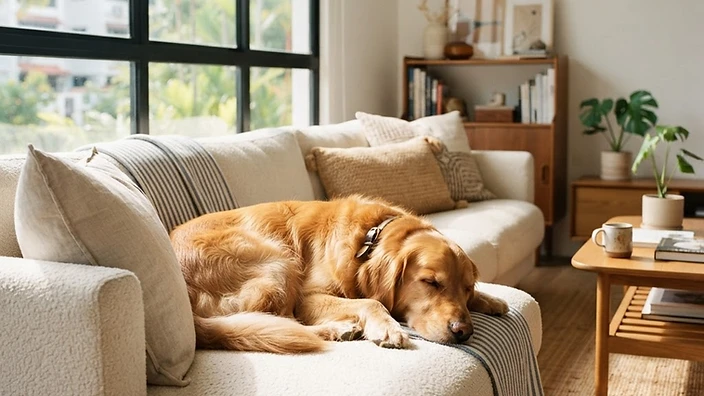
If you have a pet in Singapore, your sofa is their second bed. Cats and dogs shed fur, leave dander, track in dirt, and occasionally have accidents — and Singapore's humidity makes all of it worse. The good news: with the right habits and a twice-yearly professional clean, your sofa can stay fresh and last for years.
This guide covers the four challenges every pet-owning sofa owner faces — fur, dander, odour and stains — and what to do about each.
Challenge 1: Fur and Hair
Pet fur is the most visible problem — it gets woven into fabric fibres and is hard to remove with a regular vacuum.
Weekly routine:
- Vacuum the sofa with an upholstery attachment. Go over each cushion, the back, and the arms.
- Use a rubber glove or rubber squeegee — run it over the fabric and the static pulls fur out of the weave. This works better than a vacuum for embedded fur.
- A lint roller is good for quick touch-ups but won't reach fur woven into the fabric.
Twice-yearly: A professional clean extracts fur and dander from deep in the foam, not just the surface. This is especially important for fabric sofas, where fur works its way into the weave over time.
Challenge 2: Dander and Allergens
Pet dander — microscopic skin flakes — is the main cause of pet allergies. It's invisible but builds up in sofa foam over time. In Singapore's humidity, dander also feeds dust mites, which are themselves a major allergen.
What helps:
- Vacuum weekly with a HEPA-filter vacuum. A regular vacuum recirculates dander back into the air; a HEPA vacuum traps it.
- Wash cushion covers (if removable) in hot water (60°C) every 2–3 months.
- A professional deep extraction pulls dander out of the foam — this is the only way to remove it from non-removable cushions.
For allergy sufferers: A professional clean every 6 months, combined with weekly HEPA vacuuming, can dramatically reduce allergy symptoms. See our sofa disinfection service for anti-microbial treatment that kills dust mites.
Challenge 3: Odour
Pet odour is the hardest problem to solve — and the one most people get wrong. Air fresheners and fabric sprays mask the smell temporarily, but the source is still there.
What causes pet odour on sofas:
- Urine — even after blotting, uric acid crystals remain in the foam and release odour over time, especially in humid weather.
- Sebum — pets' skin oils transfer to fabric and go rancid, causing a "dog smell."
- Saliva — dogs that chew or lick cushions leave enzymes that smell.
- Anal glands — pets that drag or sit on the sofa can transfer a fishy odour.
What works:
- Enzyme treatment — the only method that breaks down uric acid crystals at the molecular level. This is what professional sofa deodorising uses.
- Deep extraction — removes the sebum, saliva and organic matter that feed the odour.
- Anti-microbial treatment — kills the bacteria that cause odour in the foam.
What doesn't work:
- Air fresheners and fabric sprays — mask only.
- Baking soda — absorbs some odour but can't reach the foam.
- Vinegar — neutralises some odours but leaves its own smell and can damage some fabrics.
Challenge 4: Stains and Accidents
Accidents happen — especially with puppies, kittens and elderly pets. The key is speed.
For urine: Blot immediately. Apply an enzyme-based pet cleaner (from a pet store). Follow the instructions — most need 10–15 minutes of dwell time. Don't use ammonia or bleach — ammonia smells like urine to pets and encourages repeat marking.
For mud: Let it dry completely, then vacuum. Don't try to clean wet mud — you'll push it into the fabric.
For vomit: Scoop off the solid matter. Blot with a cloth. Apply an enzyme cleaner. The acid in pet vomit can damage fabric dyes, so act fast.
For old or repeated accidents: Surface cleaning won't reach the foam. A professional enzyme treatment, applied to both sides of the cushion, is usually needed. See our sofa deodorising service.
Fabric vs Leather Sofas for Pet Owners
Fabric sofas trap more fur, dander and odour, but are more comfortable for pets and harder to scratch. If you have a fabric sofa, budget for professional cleaning every 6 months.
Leather sofas are easier to wipe clean and don't absorb odour as much, but they're vulnerable to scratches from claws. If you have a leather sofa, keep claws trimmed and use a leather conditioner every 3 months. See our leather sofa cleaning guide.
A Pet Owner's Sofa Care Schedule
- Daily: Brush your pet — less fur on the pet means less fur on the sofa.
- Weekly: HEPA vacuum the sofa. Use a rubber glove for embedded fur.
- Monthly: Check for odour. If you smell anything, don't mask it — treat the source.
- Every 6 months: Professional deep clean + enzyme treatment. This is the single most important thing you can do.
- After any accident: Act within 5 minutes. Blot, enzyme treat, and call a professional if the smell persists.
The Bottom Line
Pets and clean sofas can coexist. The secret is consistent maintenance and a professional clean every 6 months — before fur, dander and odour build up to the point where the sofa needs replacing. A professional clean costs from S$90; a new sofa costs thousands.
Book a pet-friendly sofa clean or get a quote — we bring enzyme treatments, HEPA vacuums and pet-safe products.