Leather vs Fabric Sofa: Which is Easier to Clean in Singapore's Humidity?
Singapore's 85% humidity changes the cleaning equation for sofas. We compare leather and fabric on staining, odour, mould, maintenance and lifespan — so you can choose wisely.

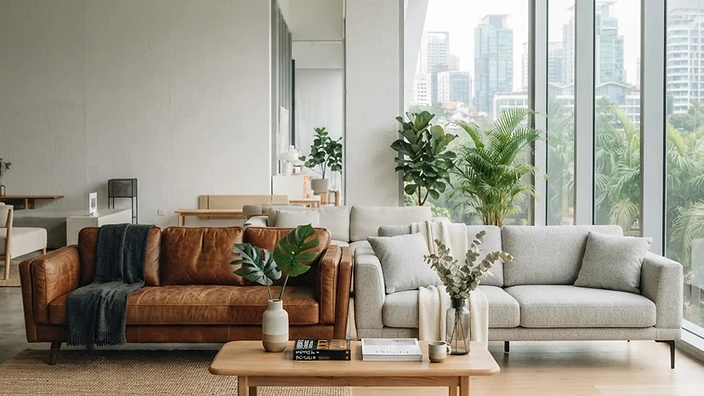
Choosing between a leather and fabric sofa in Singapore isn't just about looks — it's about maintenance. Singapore's average 85% relative humidity, year-round warmth and occasional mould season change the cleaning equation. A sofa that's easy to clean in a dry climate can be a nightmare here.
We clean both types every day. Here's an honest comparison — no sales bias, just what we see in real Singapore homes.
Staining: Fabric is Harder, Leather is More Permanent
Fabric sofas absorb spills. Coffee, curry and wine soak into the fibres immediately. However, most fabric stains are treatable — a professional extraction clean can lift even old stains from most fabrics. The exception is very light-coloured fabrics, where tannins (coffee, wine) can leave a permanent shadow.
Leather sofas don't absorb liquids — a spill sits on the surface and can be wiped off. But if a stain isn't wiped quickly, it can penetrate the leather's finish and become permanent. Ink and dye transfer (from newspapers, clothing) are especially hard to remove from leather. Once a stain penetrates the finish, it's there for good.
Winner for staining: Fabric, surprisingly — stains are more frequent but more treatable. A stained fabric sofa can usually be restored; a stained leather sofa often can't.
Odour: Fabric Absorbs, Leather Doesn't (Much)
Fabric sofas absorb odour — cooking smells, pet odour, body oils all penetrate the fabric and foam. In Singapore's open-plan homes, a fabric sofa in the living room smells like the kitchen within months. Odour requires an enzyme or solvent treatment to remove, not just a surface clean.
Leather sofas don't absorb odour as much. Wipe the surface and most smells are gone. However, the foam underneath the leather can still absorb odour over time — especially if pets sleep on the sofa.
Winner for odour: Leather, by a wide margin. If you cook a lot or have pets, leather is significantly easier to keep smelling fresh.
Mould and Mildew: The Singapore Factor
This is where Singapore's humidity really matters.
Fabric sofas are mould-prone. The foam holds moisture, and in 85% humidity, mould and mildew grow in the foam within weeks if the sofa is damp. A musty smell is the first sign. Once mould takes hold, it requires an anti-microbial treatment to kill — surface cleaning won't reach the spores in the foam.
Leather sofas can also mould, but it's surface-level and easier to treat. Wipe the leather with a mild vinegar solution and dry it thoroughly. The key is keeping the leather conditioned — dry, cracked leather absorbs moisture and is more prone to mould.
Winner for mould: Leather — surface mould is easier to treat than foam mould. But both need attention in Singapore.
Maintenance: Leather Needs More Frequent, Lighter Care
Fabric sofas need less frequent but deeper maintenance:
- Weekly vacuum with upholstery attachment
- Professional deep clean every 6–12 months
- Stain treatment as needed
Leather sofas need more frequent but lighter maintenance:
- Weekly wipe with a dry microfibre cloth
- Monthly wipe with a damp cloth and mild soap
- Quarterly leather conditioner application
- Professional clean and conditioning every 12–18 months
Winner for maintenance: Depends on your personality. If you like a quick weekly wipe, leather is easier. If you prefer to do nothing for months and then get a professional in, fabric is easier.
Lifespan in Singapore's Climate
Fabric sofas last 7–10 years with regular professional cleaning. Without it, the foam degrades from mould and body oils within 5 years, and the fabric looks worn and smells musty.
Leather sofas last 10–15 years with proper conditioning. Without conditioning, Singapore's humidity dries out the leather (ironically), causing cracks within 5–7 years. Once cracked, leather can't be fully restored.
Winner for lifespan: Leather, with proper care. Without care, both degrade faster in Singapore than in a temperate climate.
Cost Comparison
| Factor | Fabric Sofa | Leather Sofa | |--------|------------|-------------| | Professional clean | From S$90 (2-seater) | From S$120 (2-seater) | | Recommended frequency | Every 6–12 months | Every 12–18 months | | Stain removal | Usually successful | Often permanent if deep | | Odour removal | Enzyme treatment needed | Surface wipe usually works | | 10-year cleaning cost | S$900–S$1,800 | S$800–S$1,200 |
Which Should You Choose?
Choose fabric if:
- You want a softer, warmer feel
- You have children (fabric is more forgiving of scratches and is more comfortable)
- You're on a budget (fabric sofas are cheaper to buy)
- You're willing to book a professional clean every 6–12 months
Choose leather if:
- You cook a lot (open-plan kitchen)
- You have pets (easier to wipe, less odour absorption)
- Someone in the home has allergies (no dust mites in the fabric)
- You're willing to do a quick weekly wipe and condition quarterly
Whatever You Choose, Maintain It
Both leather and fabric sofas last longer and look better with regular professional care. The most expensive sofa is the one you replace early because you didn't maintain it.
- For fabric: Fabric sofa cleaning
- For leather: Leather sofa cleaning
- For both: Full pricing or get a quote
We clean both types every week. Send us a photo of your sofa and we'll tell you exactly what it needs.